A type rating transforms a commercially licensed pilot into a specialized operator qualified to command specific complex aircraft. While initial flight training teaches foundational airmanship, commercial jets and large turboprops feature distinct automation, system architectures, and handling characteristics that require specialized authorization. Earning a B737 NG Type Rating represents the gateway to flying for major commercial airlines, corporate flight departments, and cargo carriers worldwide.
Prerequisites for Entering Type Rating Training
Before enrolling in an authorized type rating course, aviation regulatory authorities mandate specific flight experience and licensing baseline qualifications. Meeting these entry standards ensures candidates possess the advanced flying skills required to keep up with intensive ground school and simulator training phases.
- Commercial Pilot License: Candidates must hold a valid Commercial Pilot License or Airline Transport Pilot License with multi-engine ratings.
- Instrument Rating: An active multi-engine instrument rating ensures the pilot operates proficiently under instrument flight rules.
- Aviation Medical Certificate: Pilots must maintain a valid first-class or second-class medical certificate depending on operating authority guidelines.
- Theoretical Knowledge Base: Completion of advanced theoretical exams, including multi-crew cooperation courses, prepares pilots for complex flight deck operations.
- English Language Proficiency: Aviation regulators mandate a minimum operational level of English language proficiency for international commercial flight operations.
Core Phases of Type Rating Training
Type rating instruction replaces broad aviation concepts with rigorous, aircraft-specific standard operating procedures. Training focuses heavily on crew resource management, automation management, and abnormal system operations.
Academic Ground School and Systems Mastery
The training journey begins in the classroom, where pilots analyze the aircraft’s mechanical and electrical architecture. Ground school covers flight management computers, hydraulic power, fuel distribution, environmental controls, and flight control logic. Computer-based training modules allow students to interact with virtual cockpits, learning every switch location, limitations chart, and memory item required for emergency checklists.
Fixed-Base and Full-Flight Simulator Practice
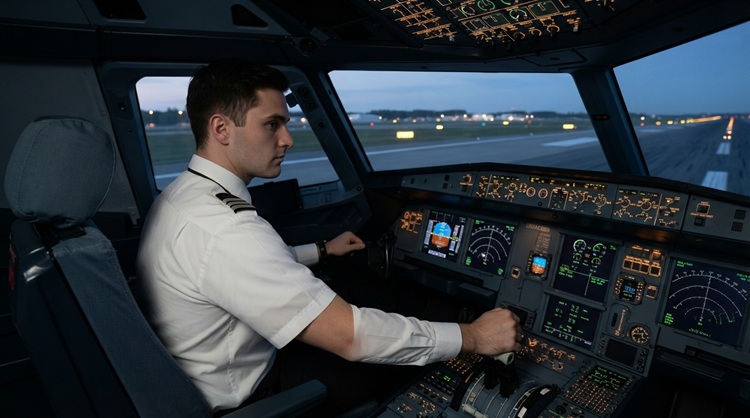
Transitioning from theory to practical application occurs in advanced flight simulation training devices. Initial sessions take place in fixed-base trainers to establish cockpit familiarity and procedural flow discipline. Pilots then move to Level D Full Flight Simulators featuring full-motion systems and high-definition visual displays. Instructors introduce complex scenarios, including engine failures during takeoff, hydraulic losses, severe weather encounters, and instrument approaches in zero visibility.
The Path to Final Certification and Base Training
Once a pilot completes simulator sessions, they undergo a comprehensive Licensing Skill Test administered by an authorized examiner. The evaluator tests the candidate on systems knowledge during an oral exam before assessing real-time decision-making and manual flying skills during a multi-hour simulator check ride. Passing this test qualifies the pilot to receive the formal type rating endorsement on their license.
In many regulatory jurisdictions, newly rated pilots must complete actual aircraft base training before flying revenue flights. Base training consists of taking off and landing an empty airliner under the supervision of a training captain. Following base training, pilots enter line training with an airline, flying actual passenger routes alongside experienced instructor captains to solidify operational competency.
Conclusion
Securing a type rating represents a pivotal milestone that elevates a pilot’s career from light aircraft operations to the flight decks of sophisticated commercial jets. By mastering complex systems, perfecting standard operating procedures, and demonstrating precise instrument handling in full-motion simulators, pilots gain the skills necessary to command modern aircraft safely. Navigating the rigorous requirements, ground school academics, and practical evaluations requires dedication, but the reward is a professional qualification that unlocks rewarding flight opportunities worldwide.